Academics at Hanover:
As a geology student at Hanover, you will develop your scientific reasoning through discoveries in the classroom and in the field. Geology studies are supported by a wide range of hands-on experiences that make learning come to life.
Our small class sizes allow for lively discussions about compelling issues in geology, ranging from global warming to depletion of our natural resources. You will have opportunities to work with state-of-the-art laboratory technology and pursue research in collaboration with our faculty. You will gain valuable field experience in at least one of Hanover’s off-campus travel courses to the Grand Canyon, Ghost Ranch, N.M., or even northwest Scotland, where you will learn how to recognize rock types and geological structures, as well as apply your knowledge to field-mapping and problem-solving.
Our students are prepared for graduate school or careers in environmental geology, geotechnical consulting, hydrology and the energy and mineral industries. As a Hanover geology graduate, you will be equipped with the knowledge and skills to address critical issues that will shape our planet’s future.
WHAT MAJORS AND COURSES CAN I PURSUE?
We offer majors in Geology, Environmental Geology, Geochemistry, and Geophysics; the latter three majors are offered within our interdisciplinary Environmental Science Program.
Courses taught by our faculty:
- GEO 161 – Physical Geology
- GEO 162 – Geology of National Parks and Monuments
- GEO 163 – Environmental Geology
- GEO 221 – Introduction to Geographic Information Science
- GEO 224 – Mineralogy and Petrology
- GEO 237 – Field Study
- GEO 239 – Field Studies in Historical Geology
- GEO 261 – Issues in Environmental Geology
- GEO 262 – History of Life
- GEO 323 – Structural Geology
- GEO 327 – Sedimentary Deposits
- GEO 328 – Physical Hydrogeology
- GEO 334 – Geomorphology
- ENV 265 – Global Environmental Change
- ENV 201/401 – Environmental Science Seminar
We also offer directed studies (GEO 370) developed by students in collaboration with a faculty member and special topics courses (GEO 160/260/360) when student demand merits a course not normally taught in our curriculum.
All of our majors are required to complete either an Internship (ENV 457), a Senior Seminar (GEO 461), or Senior Thesis (GEO 471 or ENV471).
STUDENTS IN THE FIELD

The geology department offers numerous exciting opportunities for studying geology in the field:
- Field-based courses
- Research opportunities
- Geology Club field trips
Our program considers getting students into the field, examining the real thing, to be its highest priority. As such, we offer several field courses during the college’s May Semester:
- GEO 162 – Geology of National Parks and Monuments
An investigation of geological features, processes, and history through field studies conducted in selected national parks and monuments in the southwestern United States. The course normally culminates with an extended backpacking trip to describe and interpret the geology of the Grand Canyon. - GEO 237 – Field Study
Field study of geologic principles, processes, and features as observed on field trips to selected areas of geologic interest near Ghost Ranch, New Mexico. Geologic mapping, aerial photograph interpretation, description and interpretation of stratigraphy and geologic structures are emphasized. - GEO 239 – Field Studies in Historical Geology
An introduction to the scientific study of geology with an emphasis on reconstructing the regional geologic and tectonic history of a geologically significant national or international setting. Students learn to identify and describe rock types, rock sequences, fossils, geologic structures, and surficial deposits and landforms; understand their formative processes; and place them within a given region’s developmental history.
- Bevis, K. A., Neace, S. D., Redmond, M., Slover, H. In the Playground of Giants; A Geo-educational Website for Any Audience.
- Ford, J. and VAN ITEN, H. Slope processes and geological hazards in the Ohio River Valley near Hanover. Indiana.
- Neace, S. D., and Bevis, K.A. The Grand Canyon as an Undergraduate Field Laboratory.
- Neace, S. D., and Bevis, K. A. Improved Sinkhole Mapping in Jefferson County, Indiana Using LiDAR Technology.
- Rice, A. B., and Van Iten, H. Gravicalymene Celebra (Raymond) from the Silurian Laurel Dolostone: Where are the Pieces?
- Rogers, K., and Bevis, K.A. Revised Mapping of the Location and Extent of Glaciation in the Central Oregon Cascades Based on LiDAR Data.
- Slover, H., and Bevis, K. A. Rock Falls and Debris Flows in Semiarid Canyons of the Southwestern United States.
- Van Iten, H. Tollerton, V. P. Jr., Ford, R. and Hunter, K. Taphonomy and Paleoecology of Paraconularia planicostata (Dawson) (Cnidaria, Scyphozoa) from the Late Mississippian Big Cove Formation (Newfoundland) and Lower Windsor Group (Nova Scotia), Eastern Canada.
WHAT CAN I DO WITH A MAJOR IN GEOLOGY?
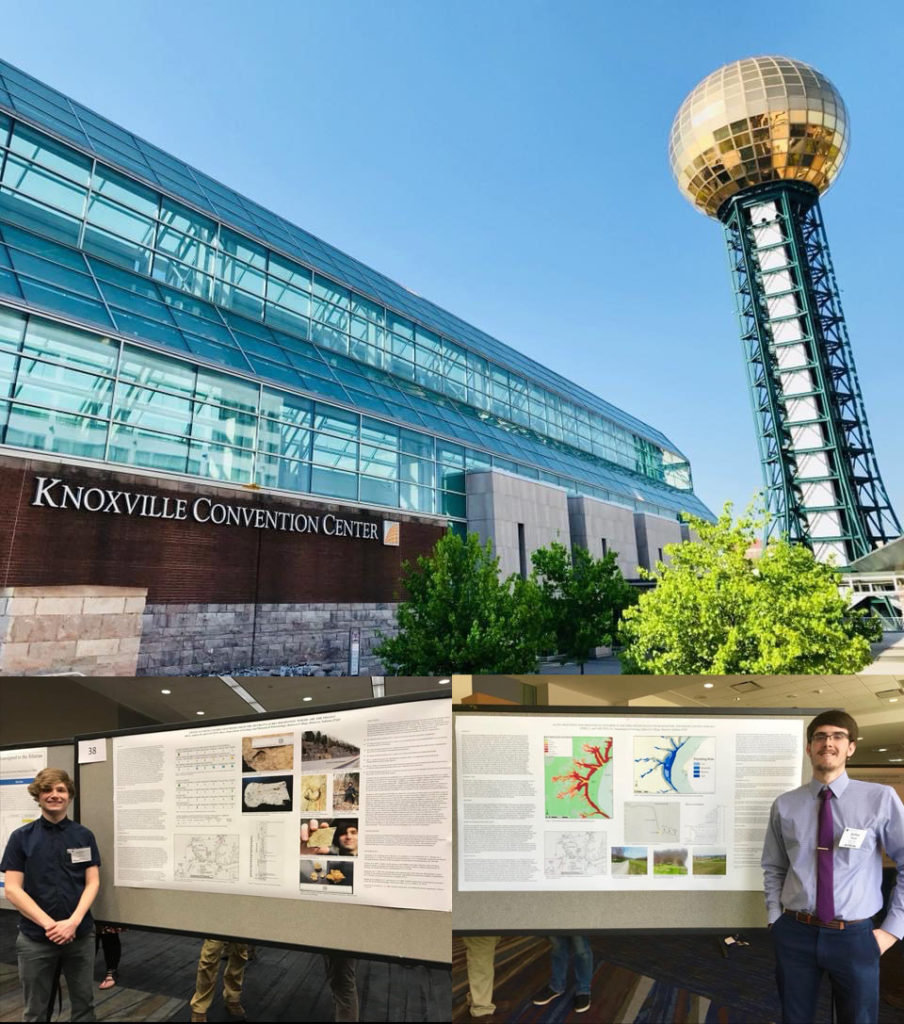
Graduate School
- Some of our recent graduates have gone on to pursue advanced degrees in graduate programs around the country:
- Juris Doctor with Dual Master of Arts, Bard Center for Environmental Policy, Annandale on Hudson, NY
- Master of Science, Geophysics, Southern Illinois University, Carbondale, IL
- Master of Science, Sedimentary Geology, Miami University Oxford, OH
- Master of Science, Applied Geophysics, University of Pennsylvania Philadelphia, PA
- Master of Science, Geology, Kansas State University Manhattan, KS
- Master of Science, Geology, Delta State University Cleveland, MS
Start a Career
- Many of our recent graduates have obtained a variety of positions in geology and related fields:
- Agricultural Resource Specialist Johnson City Soil & Water Conservation Dist., Franklin, IN
- Environmental Scientist, Aerotek Indianapolis, IN
- Environmental and Safety Oversight, Environmental Consulting, Inc. Stoughton, WI
- Environmental Specialist, Sanitation District I, Villa Hills, KY
- Field Chemist, Clean Harbors, Cincinnati, OH
- Geologist, Shelby Materials, Columbus, IN
- Geologist, Wilcox Environmental Engineering, Indianapolis, IN
- Geologist, Environmental Resources Management, Carmel, IN
- Geologist, Cardno ATC, Evansville, IN
- Hydrologist, IDEM, Indianapolis, IN
- Owner/CEO Travis Thompson Oil Corp., Mount Carmel, IL
- Project Inspector CTL Engineering, Indianapolis, IN
GEOLOGY CLUB
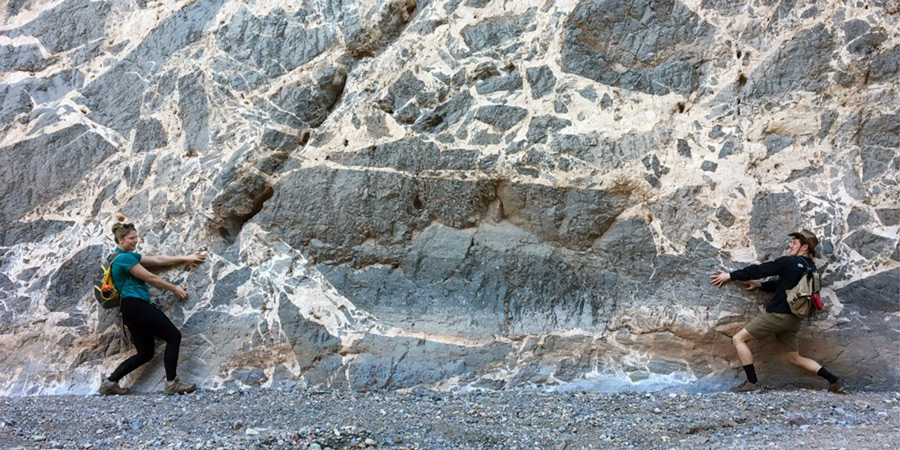
The geology department also partners with an active student-lead Geology Club to offer several field trips annually during the college’s Fall, Winter, and Spring breaks. These adventures provide great opportunities to learn geology while interacting in a nonacademic setting. Travel destinations include:
- Death Valley National Park; February, 2019
- Great Smoky Mountains National Park; October, 2019
- Grand Teton and Yellowstone National Parks; August, 2020 (tentative)